Tarot, Explained: What the Cards Actually Do (and Don’t)
Tarot has a way of provoking two very different reactions. Some people approach it as pure superstition, a stack of illustrated cardboard dressed up in mysticism. Others treat it as something close to literal fortune-telling, as if the cards themselves know exactly what tomorrow holds. The truth, as is often the case, sits somewhere quieter and more interesting than either extreme.
A Deck With Centuries of History
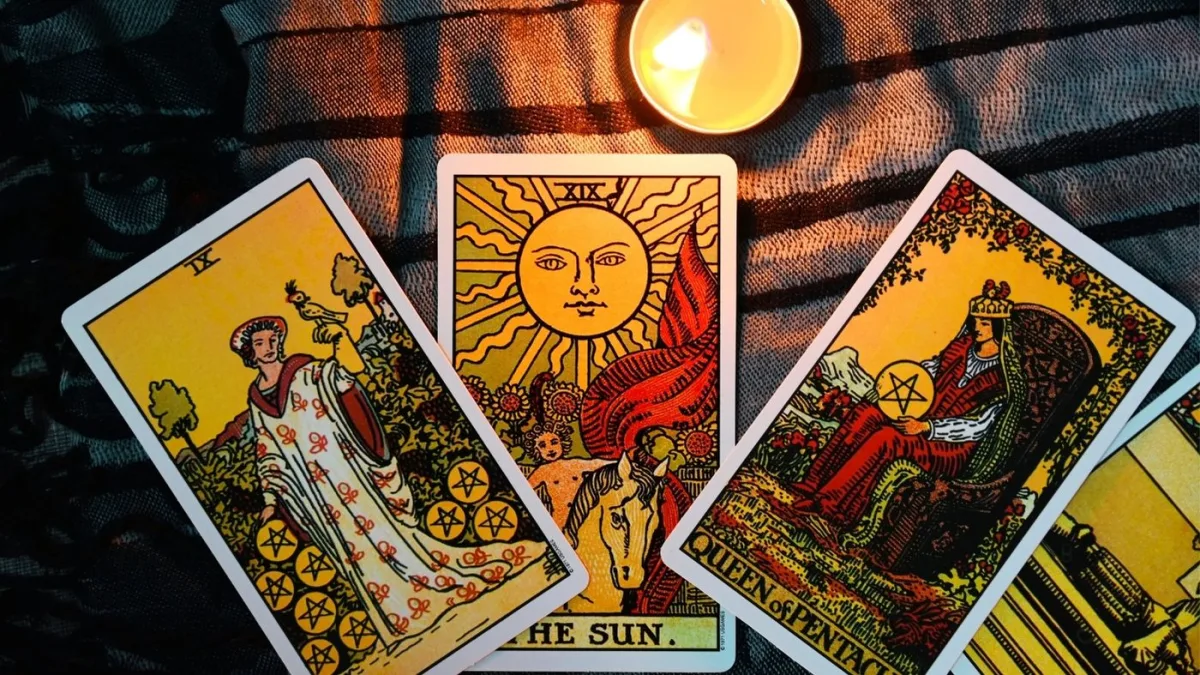
Tarot didn’t begin as a divination tool at all. The earliest decks emerged in 15th-century Italy as playing cards for a game called tarocchi, enjoyed by the aristocracy of Milan and Ferrara. It wasn’t until the 18th century, particularly in France, that occultists began reading esoteric and symbolic meaning into the imagery — linking the cards to Kabbalah, astrology, and ancient wisdom traditions, whether or not that lineage was historically accurate. By the time the now-iconic Rider-Waite deck was published in 1909, tarot had fully transformed into what most people recognize today: a structured system of 78 cards used for reflection, insight, and guidance.
That history matters, because it explains something important about how tarot actually works. It isn’t an ancient, unbroken oracle handed down from antiquity — it’s a symbolic language that has been built, refined, and reinterpreted by generations of practitioners, each adding their own layer of meaning. Reading tarot well means understanding that layered history, not just memorizing a list of card meanings.
The Two Halves of the Deck
A full tarot deck splits into two distinct sections, and understanding the difference between them changes how you read almost any spread.
The Major Arcana — 22 cards, from The Fool to The World — represent the big, archetypal forces of life: transformation, love, endings, awakenings, fate. When a Major Arcana card turns up in a reading, it tends to signal that something significant is at play, not a passing mood but a real turning point.
The Minor Arcana — the remaining 56 cards — deal with the everyday textures of life, organized into four suits. Wands speak to ambition, energy, and creative drive. Cups reflect emotion, relationships, and intuition. Swords represent the mind — thought, conflict, communication, hard truths. Pentacles (sometimes called Coins) ground everything in the material world: money, work, health, physical stability.
Together, these two halves let tarot move fluidly between the profound and the practical — a single spread might contain both a Major Arcana card pointing to a deep life shift and a Minor Arcana card describing the mundane, day-to-day mechanics of how that shift is actually unfolding.
What Tarot Reading Actually Involves
A common misconception is that tarot reading is essentially memorization — that once you know all 78 meanings, you can “read” a spread the way you’d read a manual. In practice, the meaningful work happens somewhere else entirely: in how the cards relate to each other, how their positions in a spread shape their significance, and how all of it maps onto the specific, textured situation of the person asking.
The same card can mean something quite different depending on what surrounds it. The Tower next to The Star reads very differently than The Tower next to The Devil — one suggests disruption followed by healing, the other suggests disruption compounding an existing struggle. This is the part of tarot that resists shortcuts: genuine interpretation comes from experience, pattern recognition, and a willingness to sit with nuance rather than reach for the nearest keyword.
It’s also worth being honest about what tarot doesn’t do. It doesn’t predict the future the way a calendar does. It doesn’t remove your agency or hand you a fixed script to follow. What it offers instead is a structured way of externalizing intuition — a mirror that helps surface what you may already sense but haven’t yet put into words, and a framework for thinking through the forces shaping a decision.
Different Spreads for Different Needs
Part of what makes tarot so adaptable is the range of spreads available for different kinds of questions. A single card can offer a fast, focused yes-or-no answer when time or patience is short. A three-card spread — past, present, future — adds enough narrative structure to explain not just what’s happening, but why. More elaborate layouts, like the ten-card Celtic Cross, unpack a situation in far greater depth, surfacing hidden influences, internal conflicts, and likely outcomes.
Choosing the right spread often matters more than any individual card’s meaning. A complicated relationship rarely resolves cleanly in a single card. A quick decision about whether to send an email rarely needs ten.
Reading With Experience, Not Just a Reference Guide
This is ultimately where the real difference between an automated card generator and an experienced reader shows up. Anyone can look up what The Hermit “means.” Far fewer can look at The Hermit sitting beside the Nine of Swords in someone’s present position and recognize the specific emotional weight that combination carries for that person, in that moment. That kind of reading comes only from years of sitting with the cards — noticing patterns, refining instinct, and learning to read context as carefully as content.
That’s the foundation behind the readings offered through Tarot Reader Iza — more than two decades spent learning to read not just individual cards, but the stories they tell together, for the people who bring their real questions to them.
Whether you’re drawn to tarot out of curiosity, a need for clarity, or simply a desire for a few minutes of quiet reflection, the deck rewards patience far more than it rewards certainty. The cards rarely hand you an answer outright — but they’re remarkably good at helping you find your own.